
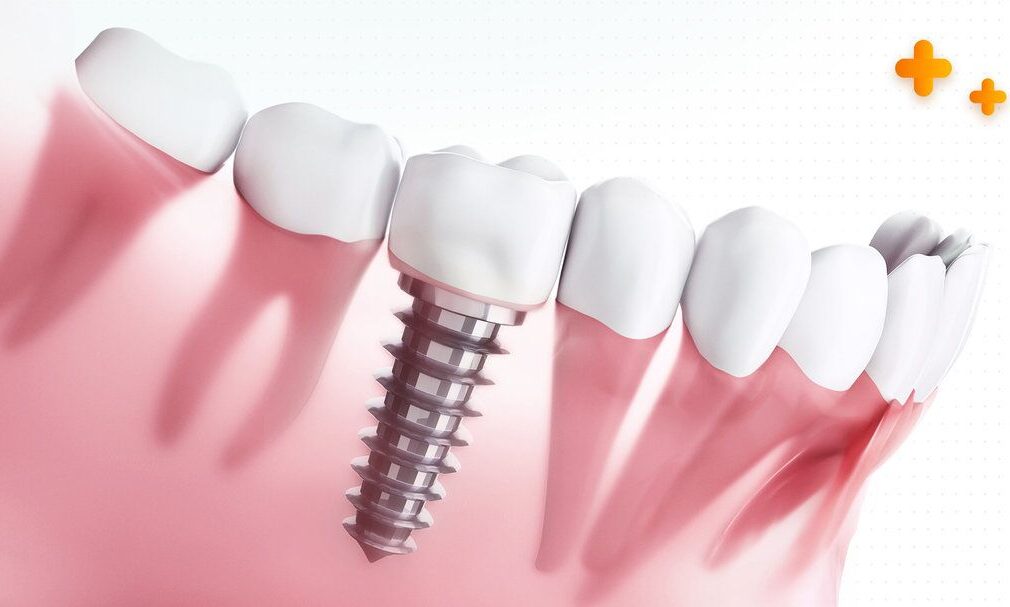
What are Dental Implants?
Dental implants are artificial tooth roots made of biocompatible materials, such as titanium, that are surgically placed into the jawbone to replace missing teeth. They serve as a stable foundation for crowns, bridges, or dentures, restoring the function and appearance of natural teeth.
Ideal for those with one or more missing teeth, dental implants offer numerous benefits including preventing bone loss, improving chewing ability, and enhancing facial aesthetics.
Types of Dental Implants
- Endosteal Implants (Most Common): Implants surgically placed directly into the jawbone and once the implant integrates with the bone (a process called osseointegration), a post is attached to support a crown, bridge, or denture.
- Subperiosteal Implants: Implants placed under the gum but above the jawbone. A metal frame is positioned on or near the jawbone under the gums, and posts protrude to hold the artificial tooth.
- Zygomatic Implants (Rare): Longer implants anchored in the cheekbone (zygoma) rather than the jawbone. It is used in cases of severe jawbone loss where conventional implants are not an option.
Who needs a Dental Implants?
- People with one or more missing teeth.
- Those with good overall health, healthy gums, and adequate jawbone density.
- Non-smokers (smoking can impair healing and reduce success rates).
- Patients without underlying health conditions that impair bone healing.