
What is Dental Filling?
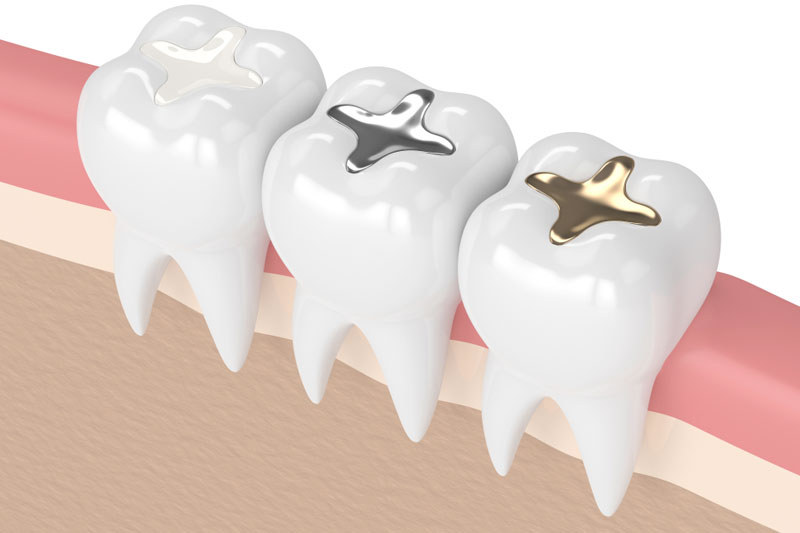
A dental filling is a restorative procedure used to repair a tooth damaged by decay or fractures. Our dentist removes the decayed part of the tooth and fills the space with a material like amalgam, composite resin, ceramic, or gold, restoring the tooth’s shape and function. Fillings prevent further decay and protect the tooth from damage.
Different materials offer various benefits. Amalgam is durable but noticeable, while fillings match the tooth color. Ceramic and gold fillings are more expensive but offer longer-lasting results. We suggest that a proper oral care is essential to maintain the longevity and effectiveness of the filling.
Types of Dental Filling
- Amalgam Fillings (Silver Fillings): A mixture of metals, including silver, tin, copper, and mercury. The advantages are it’s durable and long-lasting (can last up to 10-15 years or more) and less expensive than other materials. The disadvantages are it’s visible, not tooth colored and may require more removal of tooth structure for placement.
- Composite Resin Fillings (Tooth-Colored Fillings): It is a mixture of glass or quartz filler in a resin medium. The advantages are it’s tooth-colored, blends in with natural teeth and can be used for both front and back teeth, it also bonds directly to the tooth structure, preserving more of the natural tooth. The disadvantages are it’s less durable & expensive than amalgam.
- Ceramic Fillings (Porcelain Fillings): It is made of porcelain, often used for inlays and onlays. The advantages are its highly aesthetic, tooth-colored, and resistant to staining and also durable and long-lasting (can last over 15 years). The disadvantages are it’s more expensive than composite or amalgam & requires more than one visit.
- Gold Fillings (Inlays or Onlays): It is specially made from gold alloys. The advantages are it’s very durable (can last 20 years or more) and doesn’t corrode. The disadvantages are it’s very expensive, more visible than tooth-colored fillings and requires more than one visit, as they are made in a lab.
Procedure for Getting a Dental Filling
Diagnosis: The dentist first examines the tooth using visual inspection, dental instruments, and possibly X-rays to detect decay or damage.
Anesthesia: Local anesthesia is typically administered to numb the area around the affected tooth.
Decay Removal: The decayed or damaged part of the tooth is removed using a drill or laser, leaving a clean, prepared area for the filling.
Tooth Preparation: The dentist may apply bonding agents to the prepared area, especially for composite fillings.
Filling Placement: For amalgam or composite fillings, the material is placed into the cavity in layers and each layer is hardened with a special light.
Shaping and Polishing: Once the filling is in place, the dentist shapes and polishes the filling to match the contours of the tooth.