
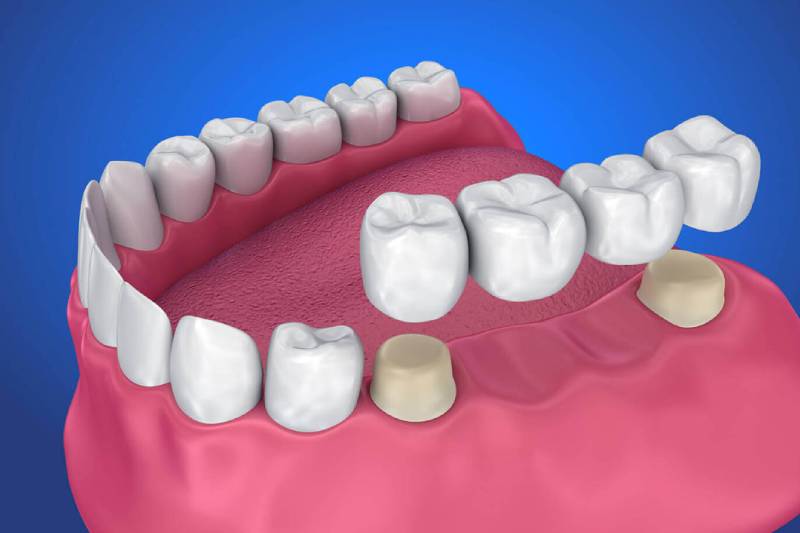
What are Bridges & Crowns?
Bridges and crowns are dental restorations used to repair damaged or missing teeth. A crown is a cap that covers a damaged tooth, restoring its shape, strength, and appearance. It is often used for teeth that are cracked, decayed or after root canal treatment. Crowns can be made of materials like metal, or a combination.
A bridge is used to replace one or more missing teeth by anchoring artificial teeth to adjacent healthy teeth or implants. Bridges fill gaps in the smile, restore chewing function, and prevent neighboring teeth from shifting out of position.
Different types of Bridges
- Traditional Bridges: The most common type is traditional bridges consisting of an artificial tooth supported by crowns on the adjacent teeth. This requires the adjacent teeth to be reshaped.
- Cantilever Bridges: It is used when there is only one adjacent tooth available to support the bridge. Less common, these are usually placed in areas with less biting force.
- Maryland Bridges: These are conservative bridges that use a metal or porcelain framework bonded to the back of the adjacent teeth rather than crowns; it preserves more of the adjacent teeth.
- Implant-Supported Bridges: Instead of using natural teeth for support, this type uses dental implants to anchor the bridge and enhance strength and longevity.
Benefits of Crowns and Bridges
- Improved Aesthetics: Both crowns and bridges restore the natural appearance of teeth, enhancing the smile and boosting confidence.
- Functionality: Crowns strengthen damaged teeth while bridges restore the ability to chew, speak, and maintain proper bite alignment by filling in gaps caused by missing teeth.
- Longevity: With proper care crowns and bridges can last many years sometimes over a decade depending on the materials used and oral hygiene habits.
- Preventing Tooth Shifting: Bridges prevent neighboring teeth from shifting into the empty space left by missing teeth which can lead to bite issues and jaw problems.